 Add to Chrome
 Add to Firefox
 Add to Edge
Thinking as Compression: Your Reasoning Model is Secretly a Context Compressor
May 27, 2026
Context compression aims to shorten long context inputs with minimal information loss for LLM inference acceleration. While existing methods have shown promise, they typically rely on complex compression modules or compression-specific training, leaving the intrinsic capabilities of LLMs underexplored. In contrast, this work reveals that a thinking model itself can naturally compress long contexts by organizing task-relevant information. We thus derive Thinking as Compression (TaC), a new compression paradigm that treats thinking itself as compressed context. Without relying on specific dedicated compressor, TaC directly prompts the thinking model to generate thinking traces as the shortened context, already outperforming most representative compression methods. Further, given that raw thinking output may struggle with budget control and shortcut behaviors, we introduce Thinking as Compression Constrained (TaC-C), leveraging a simple reward-driven optimization framework to elicit intrinsic thinking as compact and controllable compressed context. Experiments across four long-context QA benchmarks demonstrate that TaC-C consistently outperforms existing baselines. At 4x and 8x compression ratios, it surpasses the strongest competitor by 17.4% and 23.4% in average F1, and by 15.7% and 21.7% in average Exact Match Score (EM), respectively.

ConsistRM: Improving Generative Reward Models via Consistency-Aware Self-Training
Apr 08, 2026Generative reward models (GRMs) have emerged as a promising approach for aligning Large Language Models (LLMs) with human preferences by offering greater representational capacity and flexibility than traditional scalar reward models. However, GRMs face two major challenges: reliance on costly human-annotated data restricts scalability, and self-training approaches often suffer from instability and vulnerability to reward hacking. To address these issues, we propose ConsistRM, a self-training framework that enables effective and stable GRM training without human annotations. ConsistRM incorporates the Consistency-Aware Answer Reward, which produces reliable pseudo-labels with temporal consistency, thereby providing more stable model optimization. Moreover, the Consistency-Aware Critique Reward is introduced to assess semantic consistency across multiple critiques and allocates fine-grained and differentiated rewards. Experiments on five benchmark datasets across four base models demonstrate that ConsistRM outperforms vanilla Reinforcement Fine-Tuning (RFT) by an average of 1.5%. Further analysis shows that ConsistRM enhances output consistency and mitigates position bias caused by input order, highlighting the effectiveness of consistency-aware rewards in improving GRMs.
ReflectRM: Boosting Generative Reward Models via Self-Reflection within a Unified Judgment Framework
Apr 08, 2026Reward Models (RMs) are critical components in the Reinforcement Learning from Human Feedback (RLHF) pipeline, directly determining the alignment quality of Large Language Models (LLMs). Recently, Generative Reward Models (GRMs) have emerged as a superior paradigm, offering higher interpretability and stronger generalization than traditional scalar RMs. However, existing methods for GRMs focus primarily on outcome-level supervision, neglecting analytical process quality, which constrains their potential. To address this, we propose ReflectRM, a novel GRM that leverages self-reflection to assess analytical quality and enhance preference modeling. ReflectRM is trained under a unified generative framework for joint modeling of response preference and analysis preference. During inference, we use its self-reflection capability to identify the most reliable analysis, from which the final preference prediction is derived. Experiments across four benchmarks show that ReflectRM consistently improves performance, achieving an average accuracy gain of +3.7 on Qwen3-4B. Further experiments confirm that response preference and analysis preference are mutually reinforcing. Notably, ReflectRM substantially mitigates positional bias, yielding +10.2 improvement compared with leading GRMs and establishing itself as a more stable evaluator.
When Less is More: The LLM Scaling Paradox in Context Compression
Feb 10, 2026Scaling up model parameters has long been a prevalent training paradigm driven by the assumption that larger models yield superior generation capabilities. However, under lossy context compression in a compressor-decoder setup, we observe a Size-Fidelity Paradox: increasing the compressor size can lessen the faithfulness of reconstructed contexts though training loss decreases. Through extensive experiments across models from 0.6B to 90B, we coin this paradox arising from two dominant factors: 1) knowledge overwriting: larger models increasingly replace source facts with their own prior beliefs, e.g., ``the white strawberry'' $\to$ ``the red strawberry''; and 2) semantic drift: larger models tend to paraphrase or restructure content instead of reproducing it verbatim, e.g., ``Alice hit Bob'' $\to$ ``Bob hit Alice''. By holding model size fixed, we reflect on the emergent properties of compressed context representations. We show that the culprit is not parameter count itself, but the excessive semantic capacity and amplified generative uncertainty that accompany scaling. Specifically, the increased rank of context embeddings facilitates prior knowledge intrusion, whereas higher entropy over token prediction distributions promotes rewriting. Our results complement existing evaluations over context compression paradigm, underpinning a breakdown in scaling laws for faithful preservation in open-ended generation.
TRE: Encouraging Exploration in the Trust Region
Feb 03, 2026Entropy regularization is a standard technique in reinforcement learning (RL) to enhance exploration, yet it yields negligible effects or even degrades performance in Large Language Models (LLMs). We attribute this failure to the cumulative tail risk inherent to LLMs with massive vocabularies and long generation horizons. In such environments, standard global entropy maximization indiscriminately dilutes probability mass into the vast tail of invalid tokens rather than focusing on plausible candidates, thereby disrupting coherent reasoning. To address this, we propose Trust Region Entropy (TRE), a method that encourages exploration strictly within the model's trust region. Extensive experiments across mathematical reasoning (MATH), combinatorial search (Countdown), and preference alignment (HH) tasks demonstrate that TRE consistently outperforms vanilla PPO, standard entropy regularization, and other exploration baselines. Our code is available at https://github.com/WhyChaos/TRE-Encouraging-Exploration-in-the-Trust-Region.
Advancing General-Purpose Reasoning Models with Modular Gradient Surgery
Feb 02, 2026Reinforcement learning (RL) has played a central role in recent advances in large reasoning models (LRMs), yielding strong gains in verifiable and open-ended reasoning. However, training a single general-purpose LRM across diverse domains remains challenging due to pronounced domain heterogeneity. Through a systematic study of two widely used strategies, Sequential RL and Mixed RL, we find that both incur substantial cross-domain interference at the behavioral and gradient levels, resulting in limited overall gains. To address these challenges, we introduce **M**odular **G**radient **S**urgery (**MGS**), which resolves gradient conflicts at the module level within the transformer. When applied to Llama and Qwen models, MGS achieves average improvements of 4.3 (16.6\%) and 4.5 (11.1\%) points, respectively, over standard multi-task RL across three representative domains (math, general chat, and instruction following). Further analysis demonstrates that MGS remains effective under prolonged training. Overall, our study clarifies the sources of interference in multi-domain RL and presents an effective solution for training general-purpose LRMs.
GenCRF: Generative Clustering and Reformulation Framework for Enhanced Intent-Driven Information Retrieval
Sep 17, 2024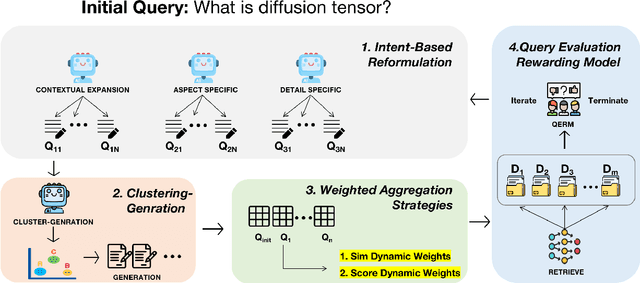
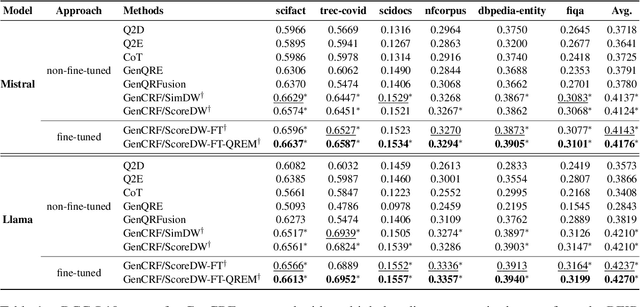
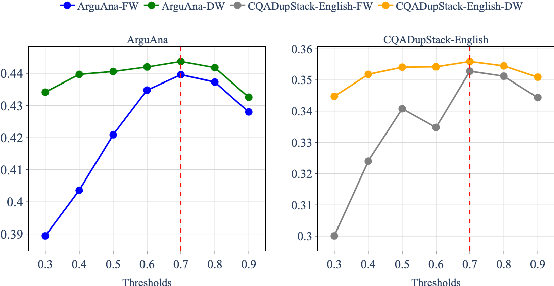
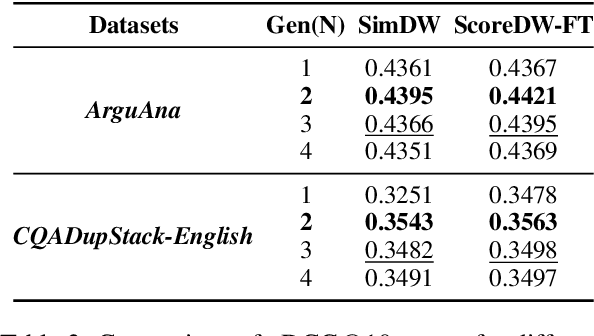
Query reformulation is a well-known problem in Information Retrieval (IR) aimed at enhancing single search successful completion rate by automatically modifying user's input query. Recent methods leverage Large Language Models (LLMs) to improve query reformulation, but often generate limited and redundant expansions, potentially constraining their effectiveness in capturing diverse intents. In this paper, we propose GenCRF: a Generative Clustering and Reformulation Framework to capture diverse intentions adaptively based on multiple differentiated, well-generated queries in the retrieval phase for the first time. GenCRF leverages LLMs to generate variable queries from the initial query using customized prompts, then clusters them into groups to distinctly represent diverse intents. Furthermore, the framework explores to combine diverse intents query with innovative weighted aggregation strategies to optimize retrieval performance and crucially integrates a novel Query Evaluation Rewarding Model (QERM) to refine the process through feedback loops. Empirical experiments on the BEIR benchmark demonstrate that GenCRF achieves state-of-the-art performance, surpassing previous query reformulation SOTAs by up to 12% on nDCG@10. These techniques can be adapted to various LLMs, significantly boosting retriever performance and advancing the field of Information Retrieval.
TPLinker: Single-stage Joint Extraction of Entities and Relations Through Token Pair Linking
Oct 26, 2020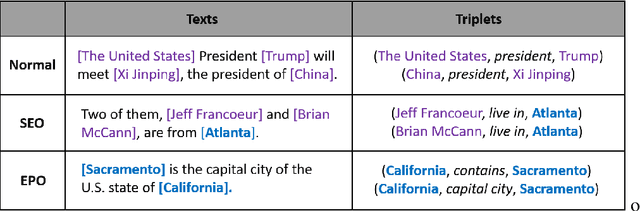

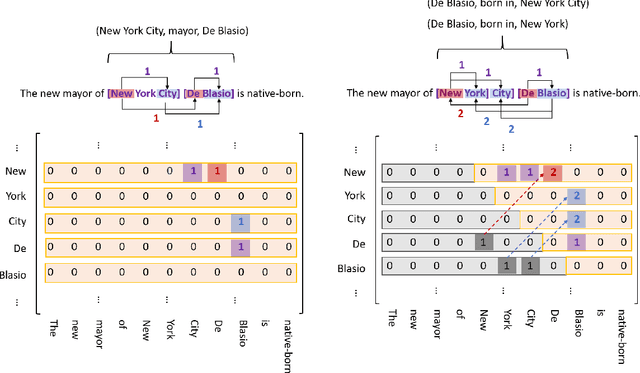
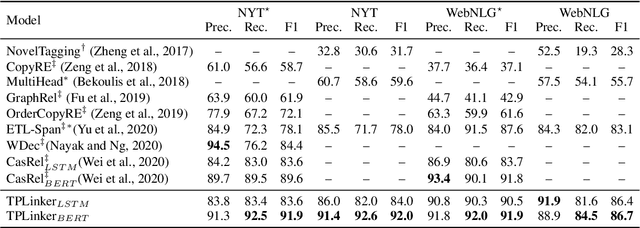
Extracting entities and relations from unstructured text has attracted increasing attention in recent years but remains challenging, due to the intrinsic difficulty in identifying overlapping relations with shared entities. Prior works show that joint learning can result in a noticeable performance gain. However, they usually involve sequential interrelated steps and suffer from the problem of exposure bias. At training time, they predict with the ground truth conditions while at inference it has to make extraction from scratch. This discrepancy leads to error accumulation. To mitigate the issue, we propose in this paper a one-stage joint extraction model, namely, TPLinker, which is capable of discovering overlapping relations sharing one or both entities while immune from the exposure bias. TPLinker formulates joint extraction as a token pair linking problem and introduces a novel handshaking tagging scheme that aligns the boundary tokens of entity pairs under each relation type. Experiment results show that TPLinker performs significantly better on overlapping and multiple relation extraction, and achieves state-of-the-art performance on two public datasets.
Focus Quality Assessment of High-Throughput Whole Slide Imaging in Digital Pathology
Nov 14, 2018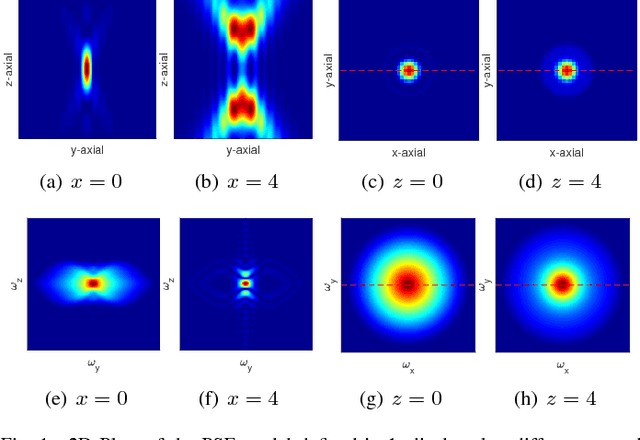
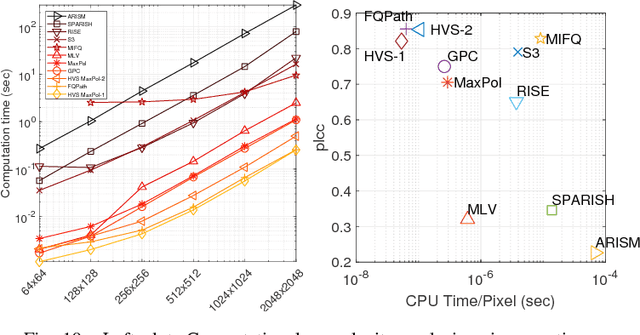
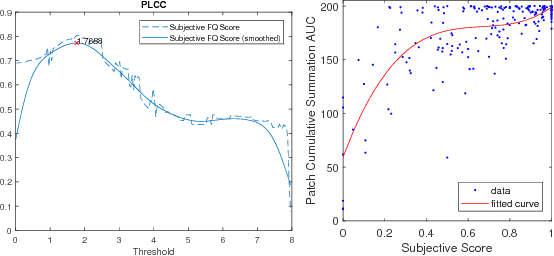
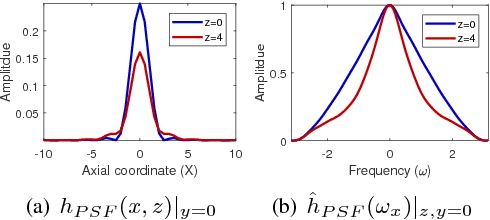
One of the challenges facing the adoption of digital pathology workflows for clinical use is the need for automated quality control. As the scanners sometimes determine focus inaccurately, the resultant image blur deteriorates the scanned slide to the point of being unusable. Also, the scanned slide images tend to be extremely large when scanned at greater or equal 20X image resolution. Hence, for digital pathology to be clinically useful, it is necessary to use computational tools to quickly and accurately quantify the image focus quality and determine whether an image needs to be re-scanned. We propose a no-reference focus quality assessment metric specifically for digital pathology images, that operates by using a sum of even-derivative filter bases to synthesize a human visual system-like kernel, which is modeled as the inverse of the lens' point spread function. This kernel is then applied to a digital pathology image to modify high-frequency image information deteriorated by the scanner's optics and quantify the focus quality at the patch level. We show in several experiments that our method correlates better with ground-truth $z$-level data than other methods, and is more computationally efficient. We also extend our method to generate a local slide-level focus quality heatmap, which can be used for automated slide quality control, and demonstrate the utility of our method for clinical scan quality control by comparison with subjective slide quality scores.